
DEF Contamination Is a Compliance Risk Most Arizona Fleets Don't See Coming
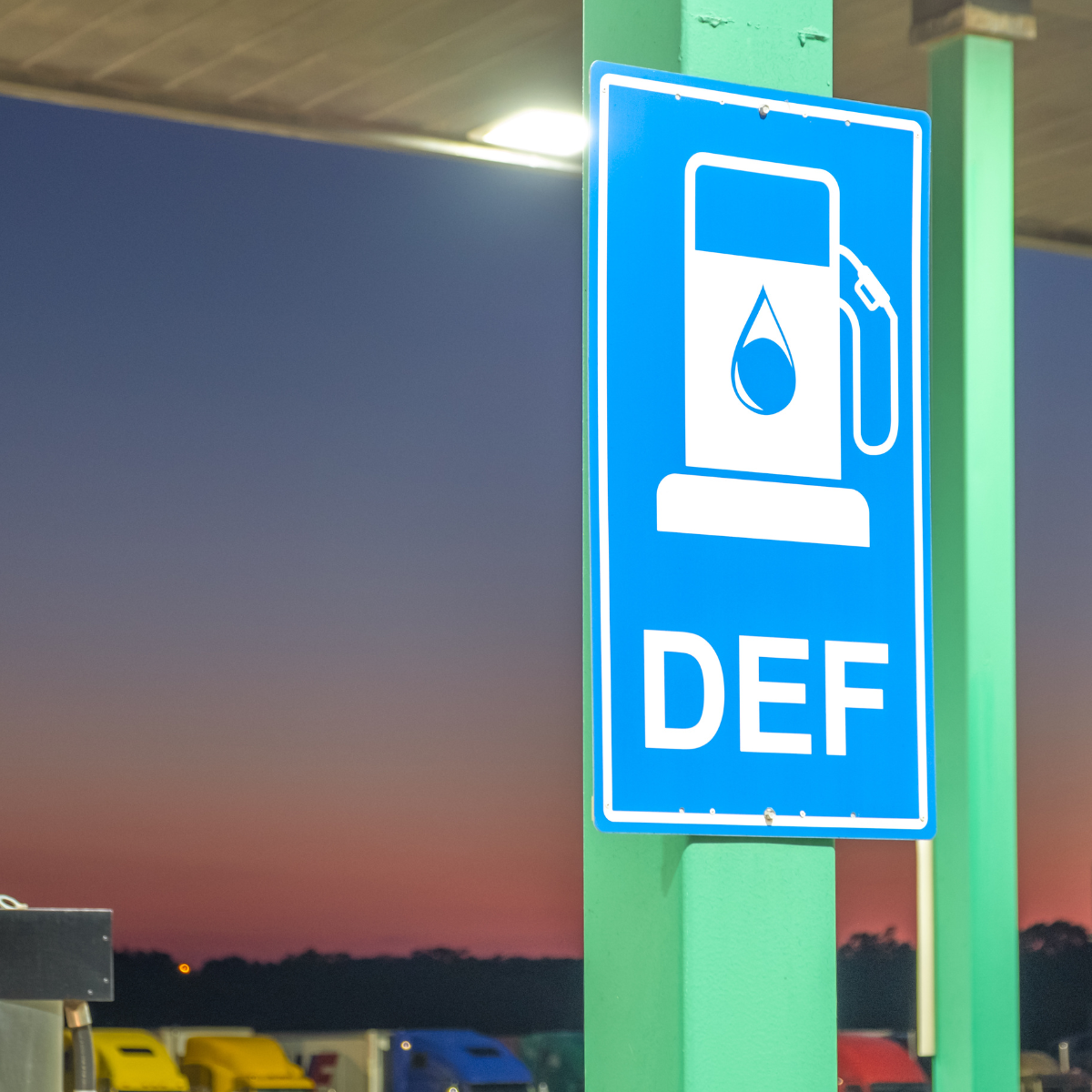
Diesel exhaust fluid doesn't get the attention that oil or coolant does. It's cheap, it's easy to find, and most fleet managers treat it as a top-off item rather than a system-critical fluid. That mindset works fine in mild climates. It falls apart in Phoenix and Chandler summers, where heat breaks down DEF faster than most maintenance schedules account for, and a bad batch can put a truck into forced derate before anyone notices a problem.
Why DEF Quality Matters More Than Most Fleets Realize
DEF is a precision mixture: 32.5% urea, 67.5% deionized water. That ratio is what allows the selective catalytic reduction (SCR) system to convert NOx emissions into nitrogen and water vapor. When that ratio shifts, even slightly, the SCR system reads it as a fault. The truck's onboard diagnostics don't wait for a breakdown. They respond with a torque derate or a full speed limitation, designed to force the issue before emissions compliance is compromised. For a fleet, that means a truck that was running fine an hour ago is suddenly crawling at 5 mph on the freeway, with no mechanical failure to point to. The fluid did that, not the engine.
How Arizona Heat Degrades DEF Faster Than Fleets Expect
DEF has a shelf life, and heat is the single biggest factor that shortens it. At consistent temperatures above 86°F, degradation accelerates. Above 120°F, which is a normal surface and storage temperature for uncovered containers in a Phoenix summer, the breakdown happens fast enough to matter within weeks, not months. The urea in DEF converts to ammonia and biuret as it breaks down. Neither of those does the SCR system any favors. Biuret in particular can crystallize inside injector lines and dosing valves, which turns a fluid quality problem into a hardware problem. The fleets that get caught off guard are usually the ones storing DEF the way they'd store any other consumable: on a pallet in direct sun, in a yard tank that hasn't been checked in months, or in totes that get reused past their intended life.
Where Contamination Actually Comes From
Heat degrades DEF on its own, but contamination is usually a handling problem, and it shows up in a few predictable ways:
• Cross-contamination with diesel fuel: A shared funnel, a mislabeled container, or a nozzle mix-up introduces hydrocarbons into the DEF tank. This is one of the fastest ways to damage an SCR system.
• Water intrusion from condensation: Bulk tanks and totes that aren't properly sealed collect condensation, especially with Arizona's swing between daytime heat and overnight cooling. That shifts the urea concentration outside spec.
• Dust and particulate contact: Open pouring in a yard environment introduces particulates that clog dosing components over time.
• Extended storage past the use-by date: DEF purchased in bulk to save money often sits longer than it should, especially during slower seasons.
None of these show up as a visible problem until the truck is already in derate or throwing an SCR-related fault code.
What Bad DEF Actually Costs a Fleet
The direct cost of degraded DEF is rarely the fluid itself. It's everything downstream:
• Unplanned downtime from a derated truck that has to be pulled from a route
• Diagnostic time spent chasing what looks like a sensor or emissions fault before DEF quality is even considered
• Component damage to dosing injectors, DEF pumps, and the SCR catalyst itself if contaminated fluid runs through the system repeatedly
• Compliance exposure, since a truck operating in derate or with an active emissions fault can factor into CSA scores during a DOT encounter
A fleet that treats DEF as an afterthought is often paying for that decision in diagnostic hours and missed routes, not in the cost of the fluid.
Storage and Handling That Actually Holds Up in Arizona
A few practices make the difference between DEF that performs and DEF that quietly fails:
• Keep it shaded and cool: Indoor storage or a shaded, ventilated area beats direct sun every time. If outdoor storage is unavoidable, insulated or double-walled tanks help.
• Buy closer to what you'll use: Bulk pricing looks good on paper, but DEF sitting in inventory for six months in Arizona heat has often already degraded before it's used.
• Use dedicated equipment: Separate funnels, hoses, and containers for DEF only, never shared with diesel fuel or other fluids.
• Check seals and caps regularly: A compromised seal is an open invitation for condensation and dust.
• Test before it becomes a guessing game: DEF quality can be checked with a refractometer or test strips as part of routine PM, rather than assumed.
Why This Belongs in a Fleet's Maintenance Program, Not a Side Task
DEF quality is easy to overlook because it doesn't fail the way a worn part does. It fails quietly, through a spec that drifted, a tote that sat too long, or a seal that let in moisture. By the time it shows up as a derate on the road, the fluid isn't the only thing that needs attention. The SCR components it passed through may need inspection too. This is where DEF handling fits into a broader preventative maintenance program rather than standing alone. KTS builds DEF quality checks into scheduled PM visits for fleets across Phoenix and Chandler, so a degraded batch gets caught during a routine stop instead of on the side of I-10. Running trucks through Arizona summer? Make sure DEF quality is part of your PM checklist, not an assumption. Schedule a fleet maintenance consultation with KTS before heat-related derates start showing up on your routes. ktsdiesel.com/contact-us