
Monsoon Season Is Hard on Diesel Fleets: What Phoenix and Chandler Fleet Managers Need to Watch For
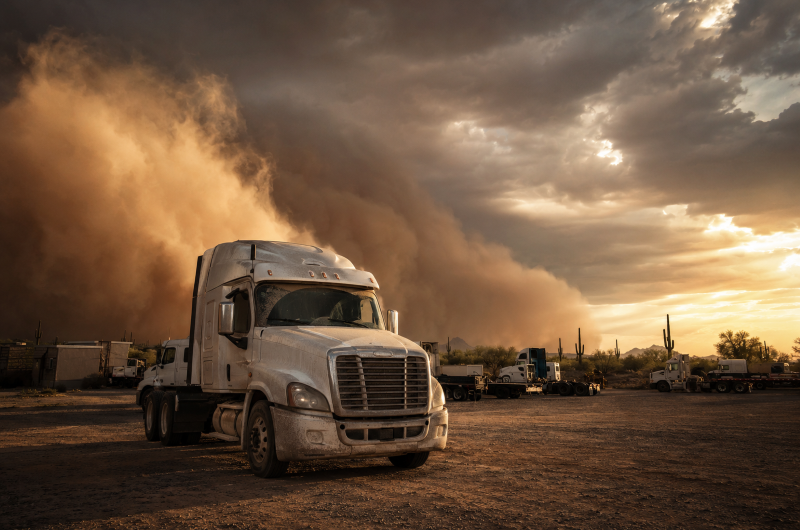
Arizona's monsoon season runs roughly from mid-June through the end of September, and it brings a very different set of risks than the dry summer heat fleet managers usually plan for. Haboobs, flash flooding, sudden downpours, and dramatic temperature swings all take a toll on diesel trucks, and most of the damage happens quietly until a truck fails on the road. Here is what to watch for and how to keep your fleet moving through monsoon season.
Haboobs and Air Intake Contamination
A haboob can drop visibility to near zero in minutes and blanket a truck yard in fine dust. That dust does not just coat the exterior. It gets pulled into the air intake system, and fine desert dust is abrasive enough to accelerate wear on air filters, turbochargers, and cylinders if it gets past a clogged or damaged filter. Trucks that run routes through open desert corridors during a dust event are especially exposed.
What to check after a dust event:
Air filter condition and replacement intervals
Turbocharger performance and unusual intake noise
Cabin air filters, which affect driver visibility and comfort
Flash Flooding and Water Intrusion
Phoenix and Chandler both have low-lying roadways and washes that flood fast during monsoon storms. A truck that drives through standing water, even briefly, risks water reaching the air intake, electrical connectors, and wiring harnesses. Diesel engines can hydrolock if enough water enters the cylinders, and that kind of damage is expensive and often preventable with driver awareness and a quick post-storm inspection. Electrical systems are particularly vulnerable.
Corrosion inside a connector rarely shows up immediately. It tends to surface weeks later as an intermittent fault code or a sensor that reads erratically, which makes it harder to diagnose and easy to miss during a routine inspection.
Extreme Temperature Swings in a Single Day
Monsoon days in the Valley can swing from triple-digit heat to a sudden storm that drops the temperature 20 or more degrees in under an hour. That rapid cycling stresses hoses, gaskets, and seals that are already working hard in Arizona heat. A cooling system that was borderline before the storm is more likely to develop a leak once it goes through repeated expansion and contraction in a short window.
Traction, Braking, and Visibility Risk
Arizona roads accumulate oil and rubber residue during the dry months, and the first rain of a storm brings that residue to the surface before it washes away. This makes for a genuinely slick period during the early minutes of any monsoon storm. Combined with reduced visibility from blowing dust or heavy rain, worn tires and marginal brakes turn a routine drive into a real hazard. Fleet managers should treat tire tread depth and brake inspections as monsoon season priorities, not just annual checklist items.
Building a Monsoon Season Readiness Checklist
Most monsoon-related breakdowns trace back to a handful of preventable issues. A short pre-season inspection focused on the following areas goes a long way toward keeping trucks on the road:
Inspect and replace air filters before peak dust season l
Test battery and charging systems, since heat and humidity both shorten battery life
Check all electrical connectors and wiring harnesses for corrosion or loose seals
Inspect hoses, belts, and cooling system seals for early signs of wear
Verify tire tread depth and brake system performance
Confirm wipers, headlights, and mirrors are in good working order for low-visibility conditions
None of these checks take long individually, but skipping them is how a manageable monsoon storm turns into a truck stranded on the side of the road and a driver waiting on a tow.
Get Your Fleet Monsoon-Ready KTS Diesel offers mobile and in-shop inspections across Phoenix and Chandler, built to catch dust, water, and heat-related issues before they take a truck out of service. Call 602-878-6088 or visit ktsdiesel.com to schedule a pre-monsoon fleet inspection.